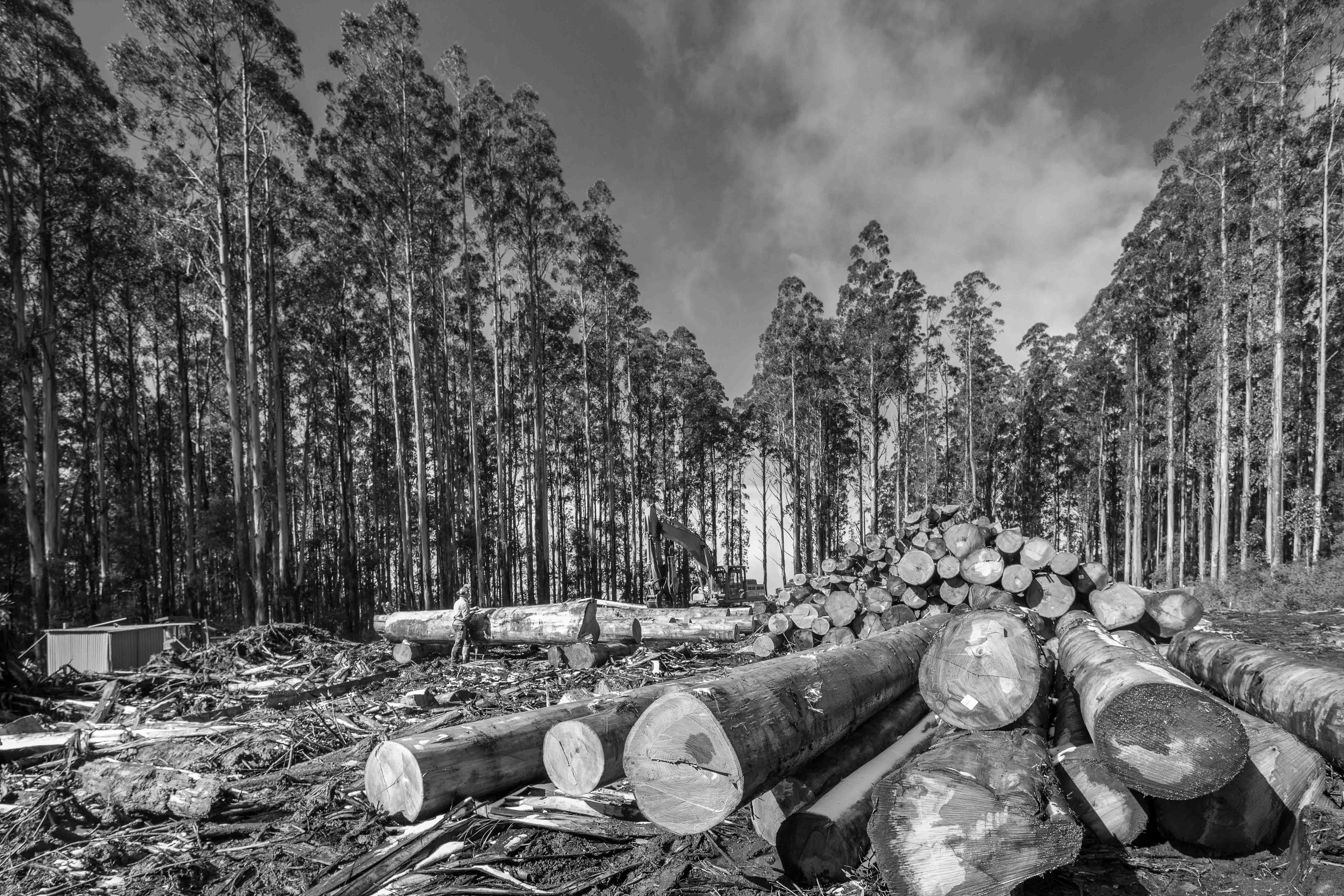
Carbon Pricing Impact Analysis
How carbon pricing reshapes forest product markets and regional economies.
The Challenge
Understanding how carbon pricing mechanisms affect the competitiveness and investment incentives of the forestry sector.
The Approach
CGE modeling to trace carbon price impacts through the economy, from plantation establishment through to processed wood products.
Key Findings
Carbon pricing creates net positive outcomes for the forestry sector through carbon credit revenue and increased demand for wood as a substitute.
The Challenge
Carbon pricing is one of the most significant policy levers affecting natural resource industries globally. For the Australian forestry sector, carbon pricing creates a complex set of impacts — increasing costs for some activities while simultaneously creating new revenue opportunities through carbon sequestration and storage.
Industry participants, investors, and policymakers need to understand how different carbon pricing levels and mechanisms affect the economic viability of plantation forestry, the competitiveness of wood products relative to emissions-intensive alternatives, and the regional economic impacts in forestry-dependent communities.
Our Approach
We employed a multi-sector CGE model to trace how carbon pricing propagates through the Australian economy, with particular attention to the forestry value chain. The analysis examined multiple carbon price scenarios ranging from $25 to $75 per tonne CO₂-e, assessing impacts on:
- Carbon sequestration incentives and plantation establishment rates
- Relative competitiveness of wood products versus steel, concrete, and aluminium
- Processing sector cost structures and pass-through effects
- Regional employment and output implications in key forestry regions
The model incorporated detailed forestry sector disaggregation, distinguishing between hardwood and softwood plantations, native forest operations, and multiple processing sub-sectors including sawmilling, panel products, and pulp and paper.
Results
The analysis revealed that carbon pricing generates net positive outcomes for the forestry sector as a whole, though with significant variation across sub-sectors and regions.
Plantation forestry benefits from dual revenue streams: carbon credit income during the growth phase and timber sales at harvest. At a carbon price of $50/tonne, the model projected a 15-20% improvement in plantation investment returns, driving increased establishment activity particularly in lower-rainfall regions where carbon sequestration rates are moderate but land costs are lower.
Wood products gain a significant competitive advantage as carbon pricing increases the cost of emissions-intensive materials. The construction sector's shift toward engineered timber products was a notable finding, with cross-laminated timber (CLT) and glulam demand projected to increase substantially under higher carbon price scenarios.
Processing sectors face mixed outcomes: while input costs rise moderately due to energy price effects, this is more than offset by increased demand for wood products and higher output prices. Regional analysis showed that forestry-dependent communities in southern Australia benefit from increased plantation activity and processing investment.
Evidence-based policy analysis
This case study demonstrates how rigorous economic modeling can quantify the complex, often counter-intuitive effects of environmental policy on natural resource industries.
Our CGE modeling approach captures the full economy-wide implications that simpler analytical methods miss, providing decision-makers with a comprehensive evidence base for policy design and investment strategy.
Learn about our CGE modeling
Related services
Explore the analytical capabilities behind this case study.
Interested in carbon pricing analysis?
Contact us to discuss how our economic analysis can support your decision-making.